-min.png)

.jpg)
Long wait times. Overcrowded waiting rooms. Delayed discharges. Frustrated staff.Patient flow chaos is one of the biggest silent killers of clinic performance — affecting patient satisfaction, clinician burnout, and revenue at the same time.
While many clinics try to solve this with more staff or stricter schedules, clinics using AI are fixing the problem at its root.
Here are 5 real lessons from clinics successfully using AI to restore patient flow.
Most bottlenecks don’t begin at reception — they begin at booking.
AI-powered clinics use:
This allows clinics to balance appointment slots, reduce overbooking, and prepare staff before patients walk in.
Good flow is planned, not managed in real time.
Clinics often blame staff shortages for delays.
AI-driven clinics look at:
By understanding where time is actually lost, clinics eliminate unnecessary steps instead of pushing staff harder.
AI replaces guesswork with visibility.
Many clinics operate with separate systems for:
AI clinics integrate these systems so that:
Interoperability turns patient flow into a continuous journey, not isolated stops.
Doctors lose valuable time to documentation, referrals, and administrative handoffs.
Clinics using AI deploy:
This shortens visits without rushing care — improving both speed and quality.
Flow improves when clinicians stay clinical.
Successful clinics don’t “install AI and forget it.”
They treat patient flow as a living system:
This creates resilience during peak seasons, staff changes, and demand spikes.
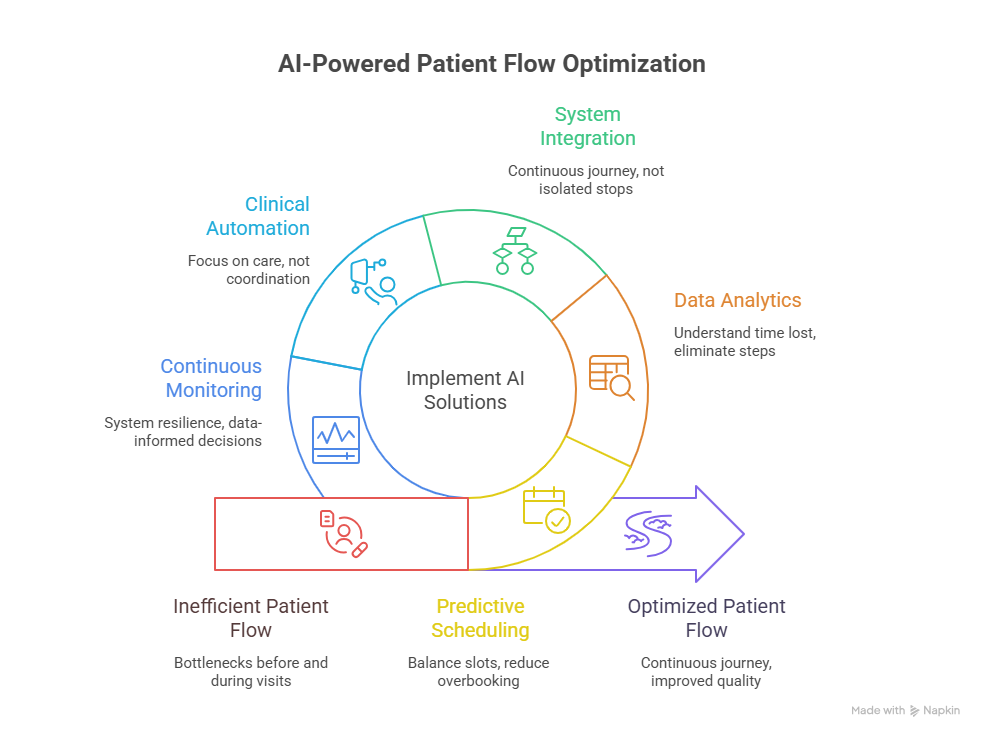
Clinics that fix patient flow using AI report:
Most importantly, they move from chaos to control.
Patient flow chaos isn’t inevitable.It’s a signal that systems need intelligence.Clinics that use AI thoughtfully don’t just move patients faster —they deliver better care, more sustainably.—TechVention builds interoperable, compliance-ready AI modules designed to optimize patient flow in modern clinics.



